Design
How to organize a one-day workshop on a customer-focused way of working
It’s important to incorporate a customer-focused way of working, and a good way to get started is with a one-day workshop. Sounds good, but how do you organize and facilitate such a workshop?
In this blog post, I'll share the most important experiences I've gained over the past few years in preparing and running these one-day workshops. We’ll definitely discuss downsides, tips and tricks.
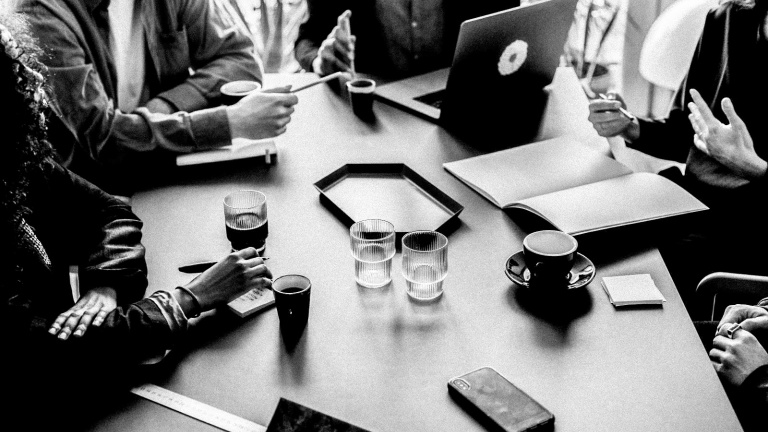
Why organize a one-day workshop on a customer-focused way of working?
With a one-day workshop on a customer-focused way of working, you can outline a design challenge, define a solution, and provide a focus-point focus (on a project) so you can quickly get back to work. A one-day workshop involves all sorts of stakeholders, from client to end users. It has an innovative nature and uses Design Thinking methods to stimulate an innovative mindset.
Besides the link with a customer-focused way of working, there are more reasons to hold a one-day workshop, as it;
- can align a group of stakeholders;
- helps to get a stalled process moving;
- provides renewed energy.
Characteristics of a one-day workshop
A one-day workshop is based on Design Thinking. In one day, you'll go through a design cycle, from Empathy, Define, Ideate, and Prototype to Test. For each phase, there are various working methods you can use to gain insights. More on that later.
In my opinion, a design cycle can fit within a self-defined timeframe, so you can have it be as large or as small as you like. And therefore, it’s possible to achieve within one day! However, it should be noted that the Test-phase includes the presentation to various stakeholders to whom you would like to present the workshop's outcomes.
With a one-day workshop:
- participants from diverse backgrounds collaborate, fostering mutual understanding and enthusiasm;
- participants "only" invest one day (preparation, guiding, and developing the process takes several days, but that's primarily the work of a facilitator);
- the tip of the iceberg is developed. It's "only" one day, after which follow-up steps are almost always necessary.
For what can you use a one-day workshop?
Some practical examples:
- Strategy sessions
- Content architecture
- Navigation between your portals
- Chatbot
- Apps
- Developing new Design System components
Step-by-step plan
For a one-day workshop to be successful, you need a facilitator and enthusiastic participants. The facilitator can help prepare the necessary materials. I generally follow the following schedule:
- At least two weeks before the workshop: intake;
- No later than two weeks before the workshop: send invitations to participants;
- One week before the workshop: distribute the agenda, introduction, and expectations;
- One week before the workshop: start gathering information and, if necessary, ask attendees to do some homework;
- The one-day workshop itself;
- One week after the one-day event: share conclusions and plan follow-up actions.
Intake
An intake with your client can take up to two hours, and the following topics will be covered:
- Challenge
- Expectations: What do we want to achieve in one day?
- Figures
- Determining the focus
- Invitees
A challenge is formulated as a HCW (How Can We ensure that…).
When determining an HCW, the focus is on a challenge, not a solution. You want to keep an HCW open-ended; the participants still have the entire day to come up with solutions! And of course, we enjoy working with numbers. If you can substantiate a design challenge, it helps in making choices and prioritizing your solution(s).
Agenda and methods
During the workshop, the Design Thinking cycle will be followed. Together with the working methods you want to use, these will determine the day's agenda. However, every design challenge is different, so I believe you'll need to tailor the agenda to your needs. When necessary, a one-day workshop focusing on the same design challenge, for example, a recurring workshop with designers in the IP sprint (see SAFe), can easily be dusted off and used again.
The daily schedule for many* one-day events looks something like this:
09:00 Participants arrive
09:30 Start, coffee, and introduction to participants
09:45 Challenge and what will we know? 10:15 Coffee, not unimportant
10:30 Heatmapping (write on sticky notes and dot-vote)
10:45 Define scope
11:15 Prepare lightning demos
11:45 Break
12:30 Demos
13:00 User test flows
13:30 Conceptualization
15:00 Develop and present concepts
16:00 Demo and action items
Phase: Challenge, Define, Ideate, Prototype, and Test.
*For strategy sessions, the second part of the agenda will not focus on demos but rather on elaboration, decisions, and agreements.
The day always begins with a discussion about the challenge, what's known, and asking questions to get a feel for the challenge. Based on your design challenge, you'll continue with the program, using the following working methods:
- Design question
- Sketch the current situation/define current situation and bottlenecks
- Insight into data
- Desk research
- Lightning Demos (inspiration)
- Personas
- Empathy map
- User flow + dot-voting
- Develop the flow in a scenario-based sketchboard/solution sketch (notes, ideas, cray 8, scenario sketch)
- Develop one or more screens or ideas
- Define next steps
- Demo/delivery
A lot of these working methods can be found online:
- Whiteboard templates for brainstorming, team management, strategy and mapping.
- Design thinking template
- Service design toolkit
- Service design tools
Who to involve?
Because I believe in Design Thinking and the collective, I'd like to invite a multidisciplinary group. During an intake (see the step-by-step plan), the composition of the group will be discussed. People from the business (feasible), end-user (desirable), and technical teams (possible) are typically invited. This means people such as the client, end-user, engineer, and helpdesk staff should be included.
My checklist for the participants:
- End user(s)
- (Implementation) team
- Client
- Committee members/management
- Technology
- Chat/social/…
- Helpdesk
Don't forget to invite a facilitator and decide who to invite to the demo at the end of the day.
The remaining participants will be determined based on the challenge. The team can be either an implementation team or a management team. As mentioned, this varies per challenge; it depends on the knowledge on the challenge being brought to the table.
Pitfalls and tips
I've never seen the workshop itself go wrong. The more material you gather, the easier the workshop runs. Even so, you'll gather a lot of information during a day like this, and you can safely assume you won't know everything beforehand. Accept the unknowns. Preparing for a one-day workshop does take time, and you should definitely keep that in mind.
Points of attention
- Preparation time → take your time to research and gather material.
- Follow-up → the work only begins after the one-day workshop is over. You have a direction, and it's likely you'll want to develop it. Set aside time for writing a report and communicating it.
Tips
1. As you can see in the general schedule, an intake meeting will take place. During the intake meeting, discuss the following questions:
1a. What challenge(s) are present?
1b. What do we want to achieve in one day?
1c. What figures or facts are available? → if you don't know, do your homework! What should the focus be?
1d.Who should be invited?
2. Provide a demonstration at the end of the day in which you present the results to management and other stakeholders. This will capture the energy of the day and increase the likelihood of creating space for next steps.
3. Regarding the role of a facilitator… Although it's often easy to get involved as a facilitator, I believe a facilitator activates people by allowing them to experience the challenge firsthand and come up with a solution. A facilitator isn't responsible for the quality of the product. They empower others and guide the process and the organization's development.
4. It helps to organize a one-day workshop at a location where everyone feels like they're 'away' and are working on a topic that's receiving attention.
Further steps
I hope you're enthusiastic about this approach and can get started. I’d advise to just do it and gain experience to learn.
Need help?
Ofcourse at Yuma we can also arrange the following for you:
- We can help create a program tailored to your needs;
- Facilitate the one-day workshop;
- Provide the workshop methods and materials needed for the one-day workshop.
Enjoyed this insight?
Share it to your network.

Don Olsthoorn
Ready to start shaping the business of tomorrow?
[email]
